From chain mail to a club

At the Ritterhaus Bubikon, Gustavo learns about the Crusades, the Order of St John and the weapons of the Swiss Confederates. But what fascinates him most is an ancient craft.

“Ouch!” That’s all Gustavo can manage to say at this moment. He has just tried to lift a coat of mail. And realised that knights must have been not only brave, but also incredibly strong.

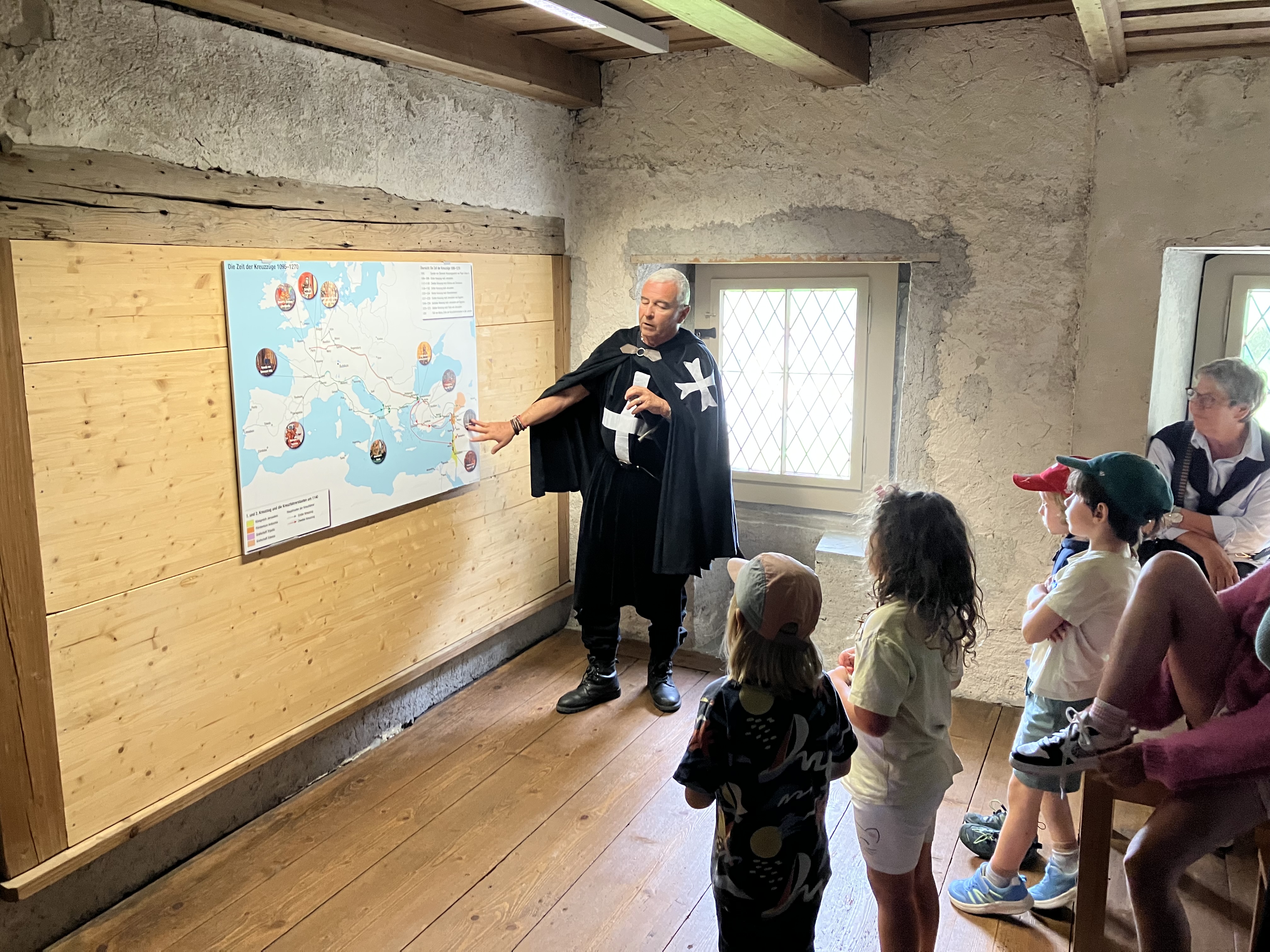
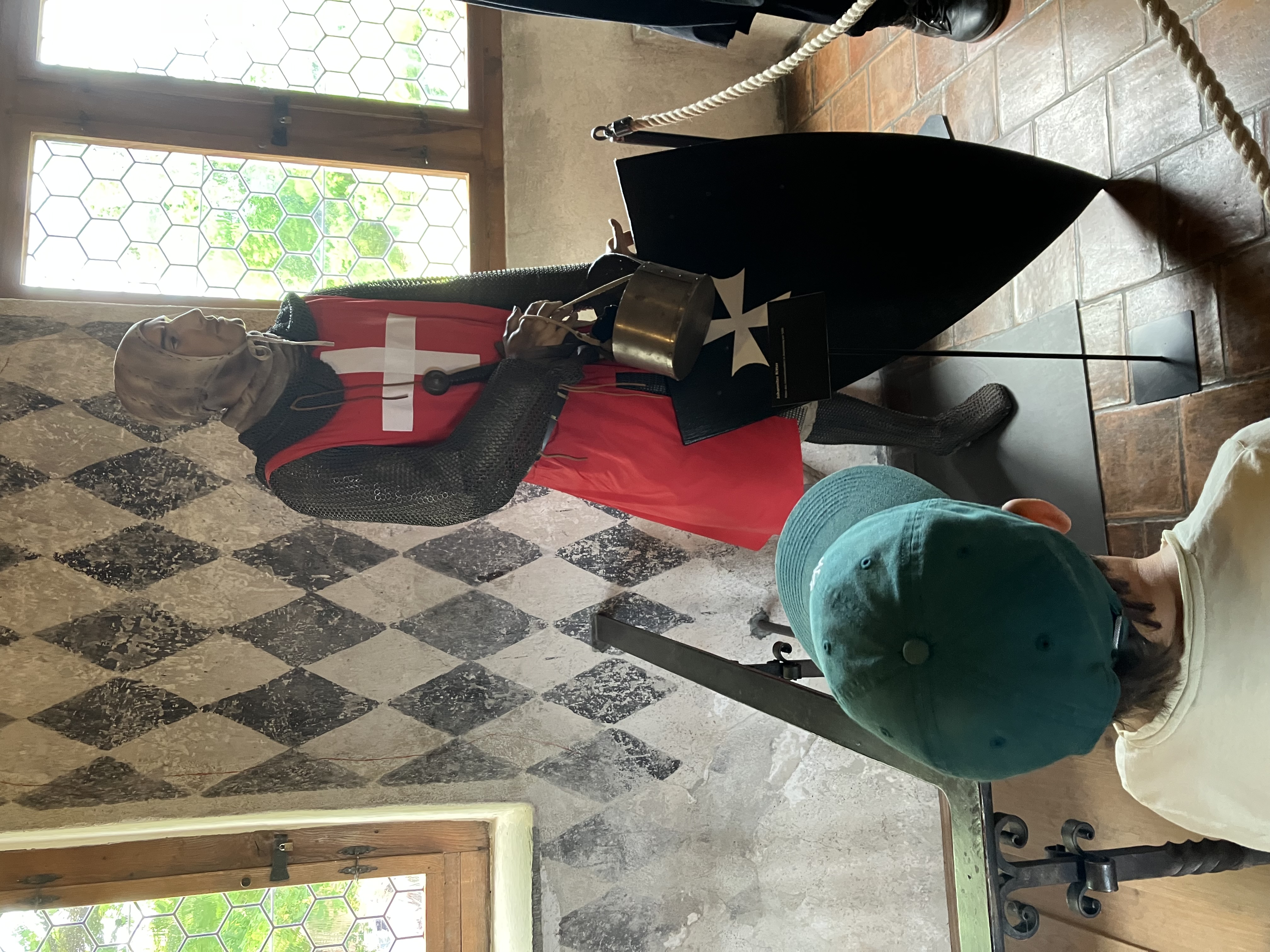
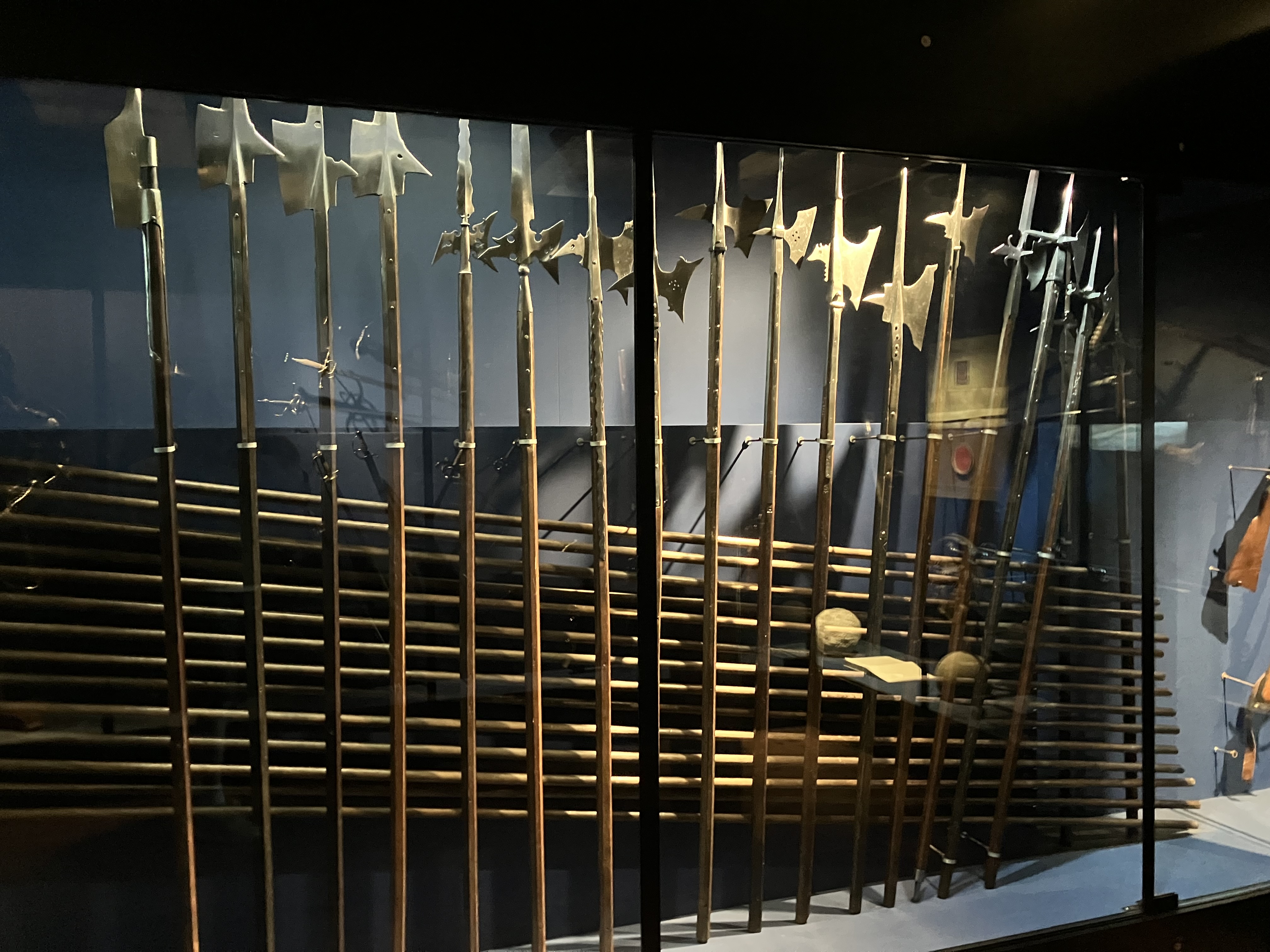
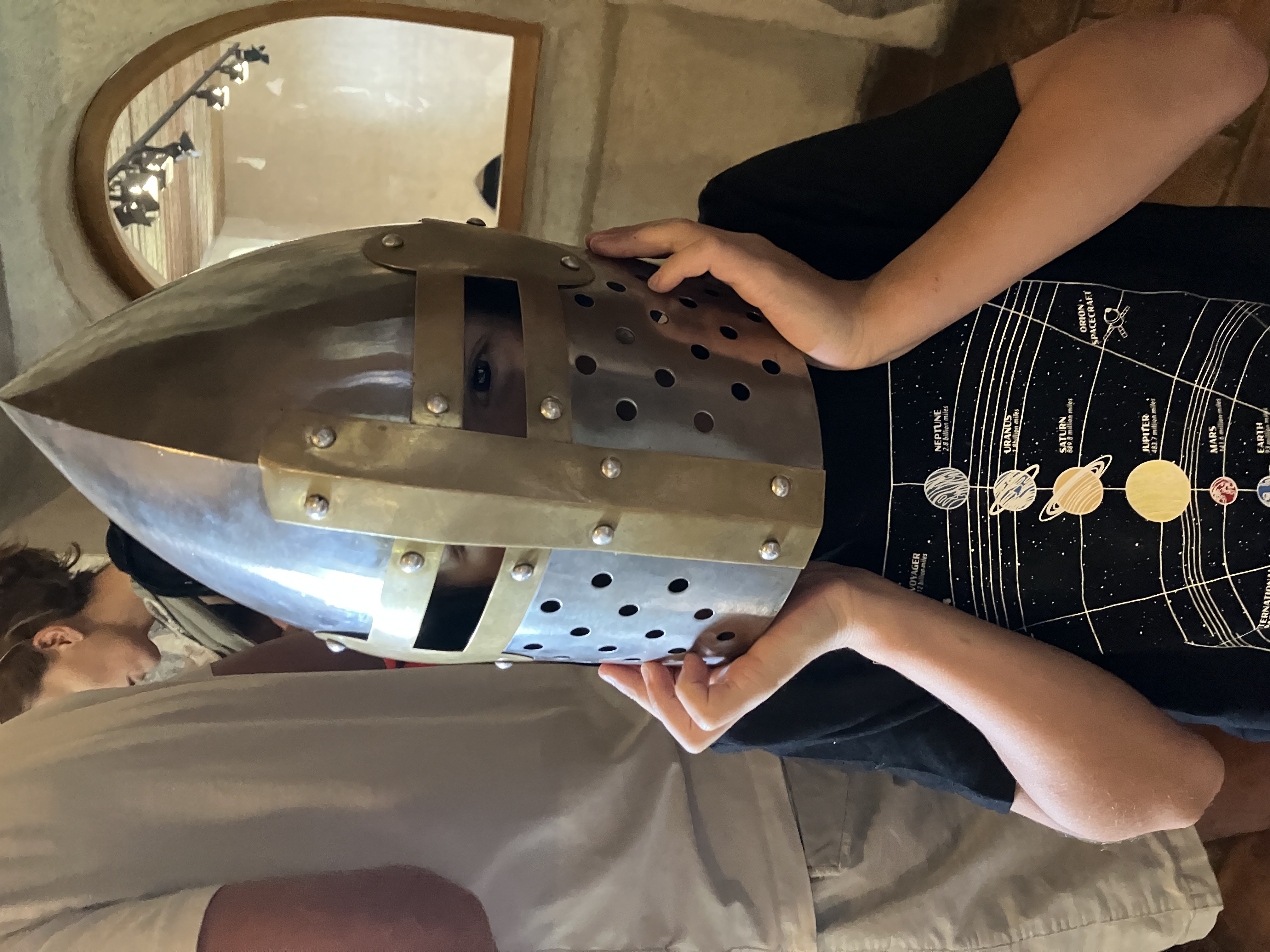
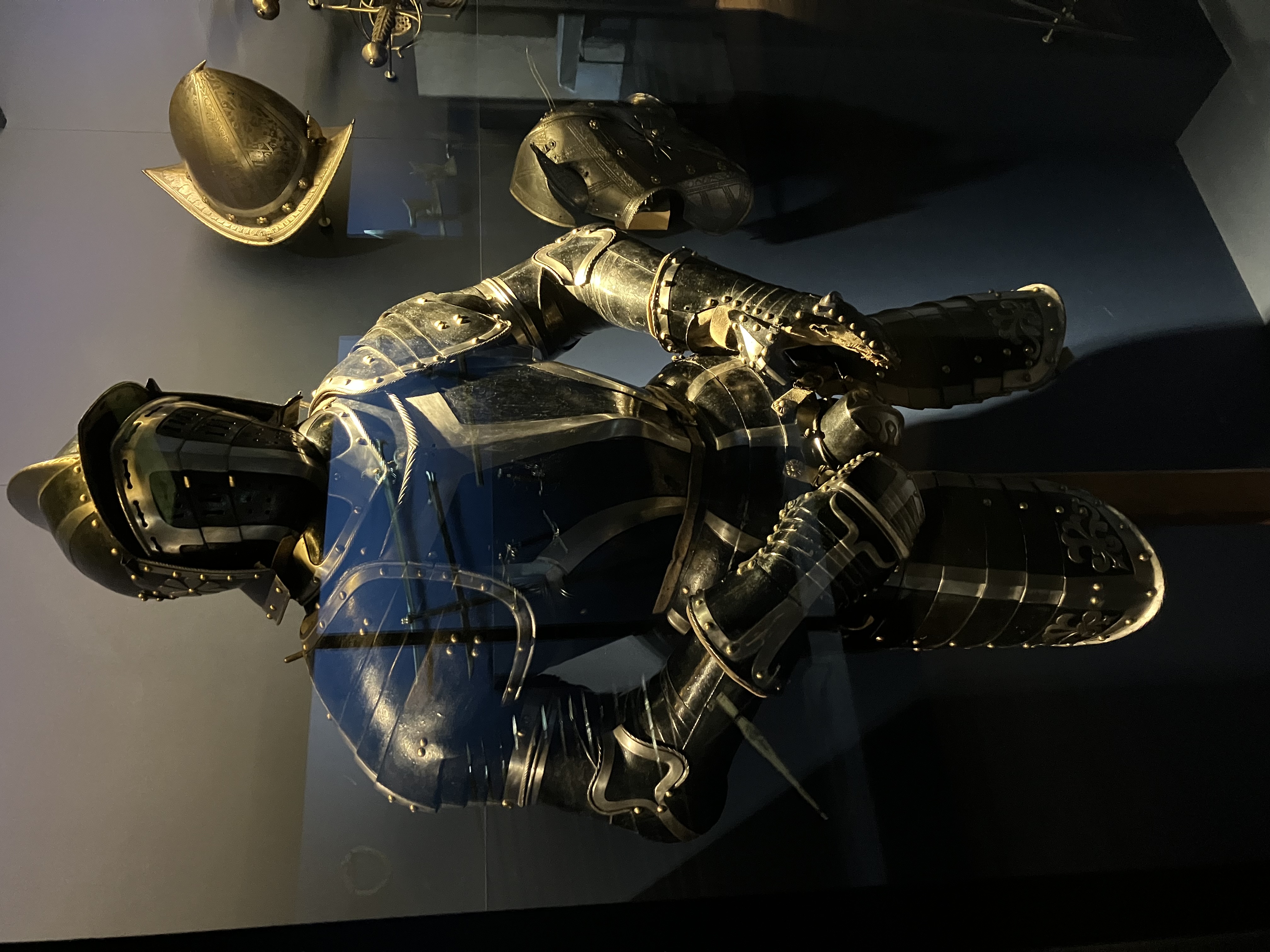
Gustavo comes to this realisation just a few minutes into the children’s tour on the open day at the Bubikon Knight’s House, which Gustavo visits in early June. “Is that man a real knight?” is his first question, as he points to the man in a black cloak with a white cross on his chest, who is hurrying ahead through the medieval rooms. He calls himself Knight Kurt and knows all sorts of things. He shows swords, shields, helmets and, later, a halberd. The latter is the famous weapon of the Swiss Confederates and looks as though someone has combined a spear, an axe and a tin opener into a single tool. But it is the chainmail that makes an even greater impression. Gustavo finds it hard to imagine that people would have voluntarily worn something so heavy.

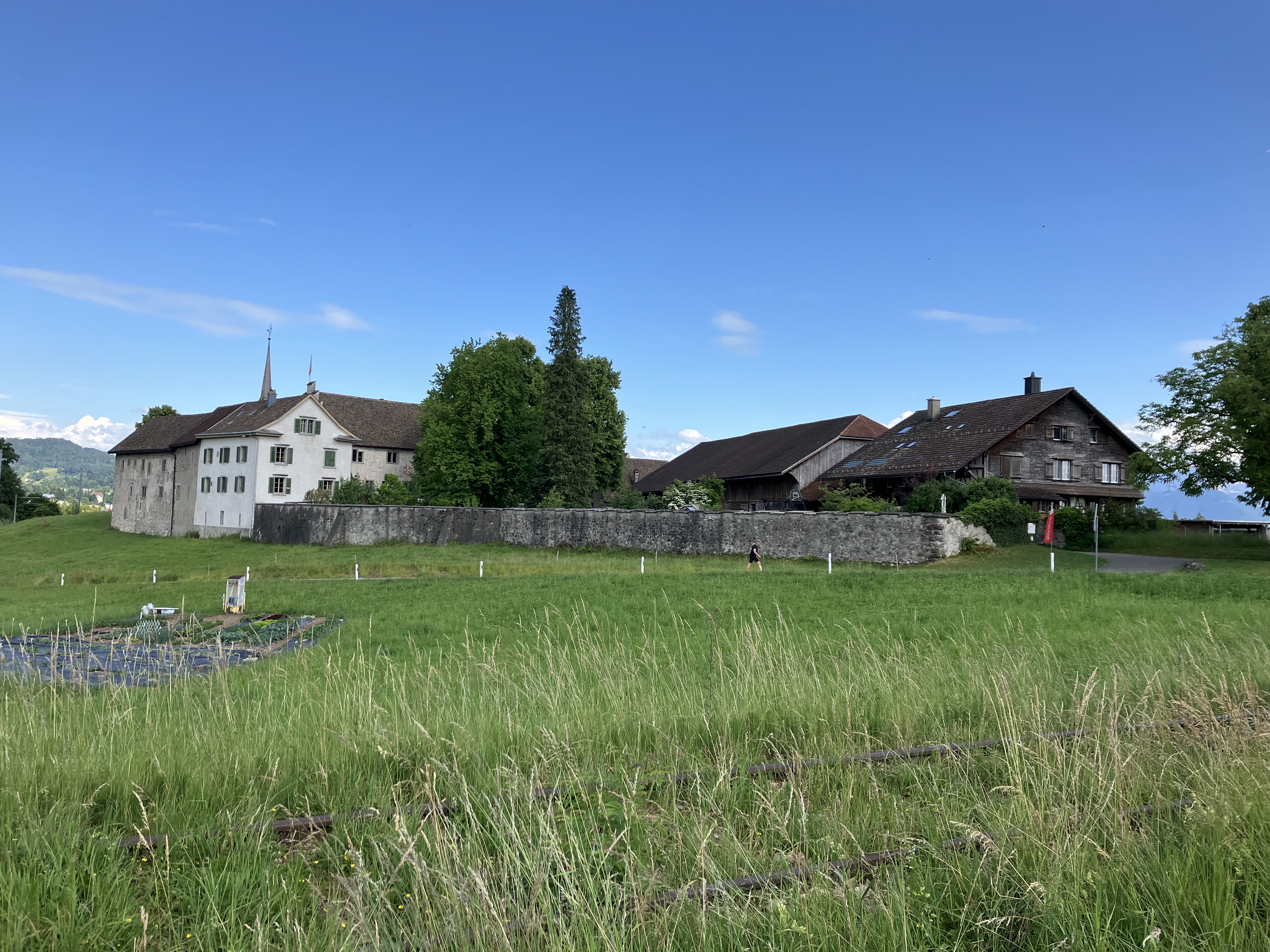
The Knights’ House itself is impressive enough. The complex is one of the best-preserved Knights Hospitaller houses in Europe. Over 800 years ago, the Order of the Knights Hospitaller received the house as a gift and continued to expand it over the centuries. The Knights of St John were originally a hospital community in the Holy Land who cared for sick pilgrims. Later, they became a knightly order. Knights, clergy and administrators also lived in Bubikon. From here, they managed their estates in the Zurich Oberland.

The Ritterhaus is not a place of fairy tales and legends – even if such stories do have their place during special events. The museum brings history to life in a vivid and tangible way. Many exhibits can be touched, tried out or viewed up close. Naturally, the Crusades are also discussed. For several centuries, knights from all over Europe travelled to the Holy Land. However, Knight Kurt recounts things that one rarely learns from films about knights. On their long journeys, the knights usually did not travel in their heavy armour at all. That was transported on ox carts. “Actually, they were often travelling in just a T-shirt”, he says. In reality, the ranks of horsemen were often not nearly as proud and stately as they appear in many paintings. Gustavo glances briefly at the chainmail. Judging by its weight, this strategy seems entirely reasonable to him.

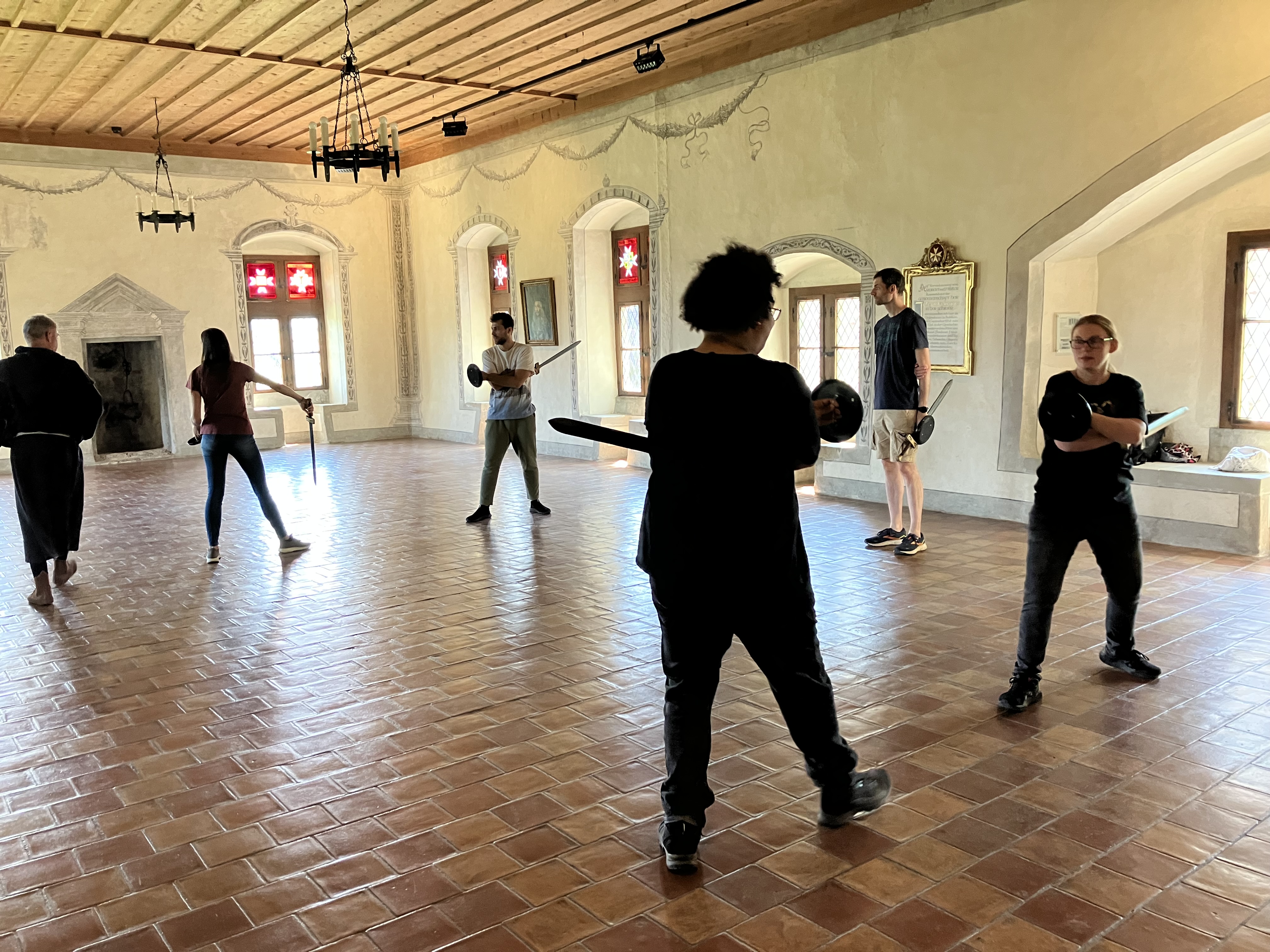
The tour takes them through the historic rooms. Gustavo lingers particularly long in the Commander’s Room. Castles from the surrounding area are depicted on the walls. He even recognises some of them. For a moment, the large hall resembles a medieval map of the Zurich Oberland. A few rooms further on, in the Knights’ Hall, there is also a fencing display taking place today. Swords cross, children watch spellbound, and for a moment the age of chivalry does not seem so far removed.

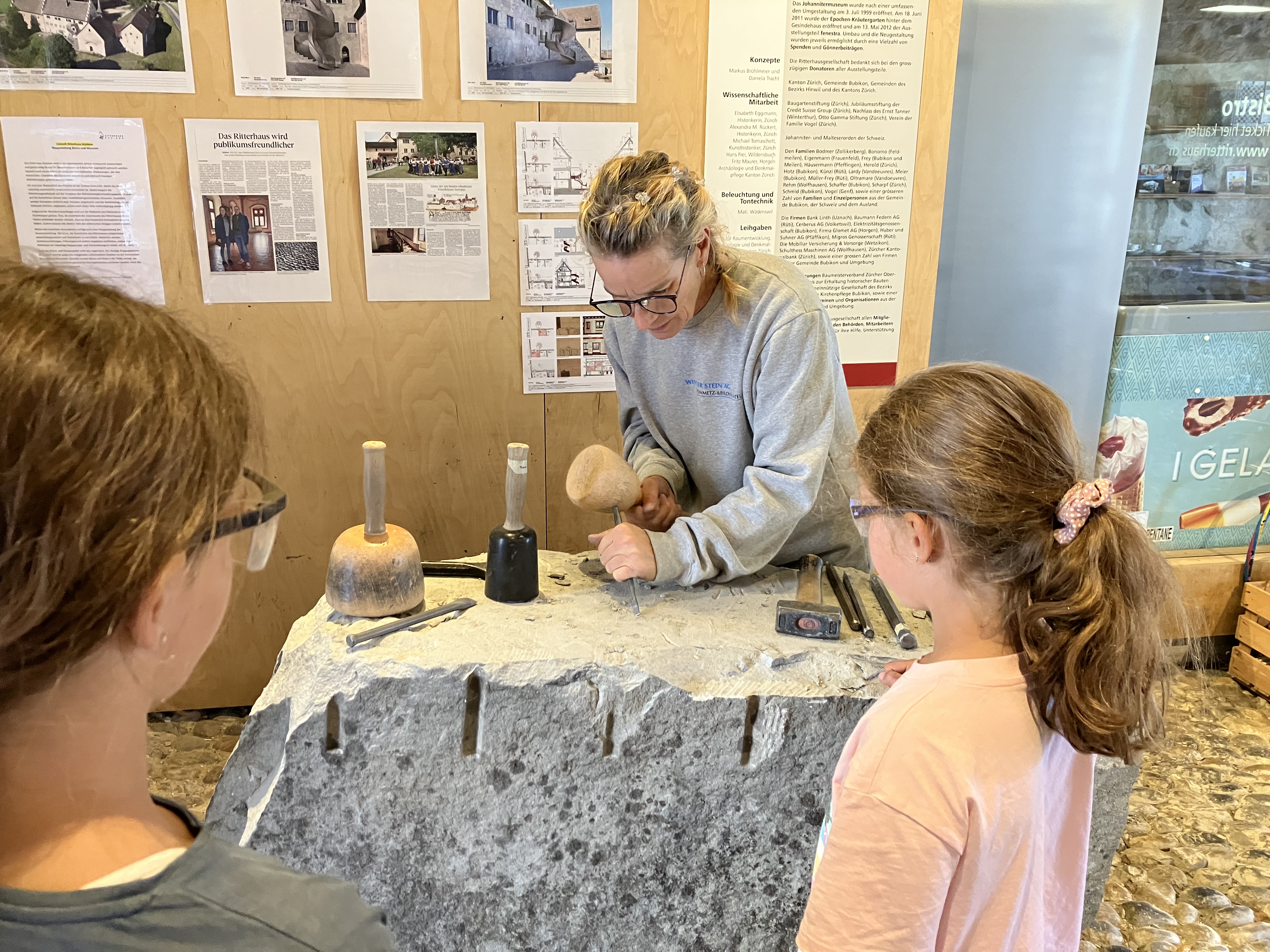
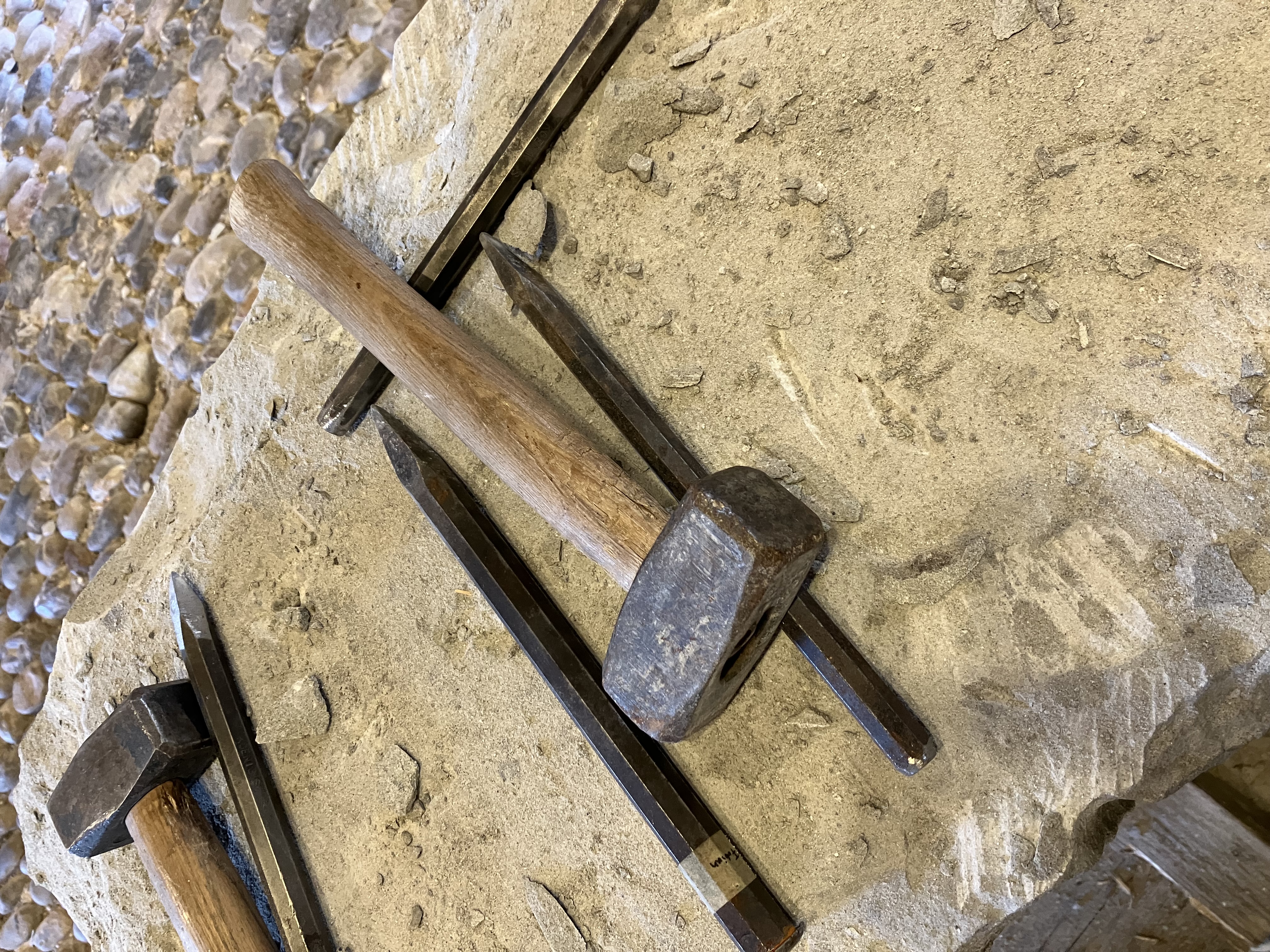
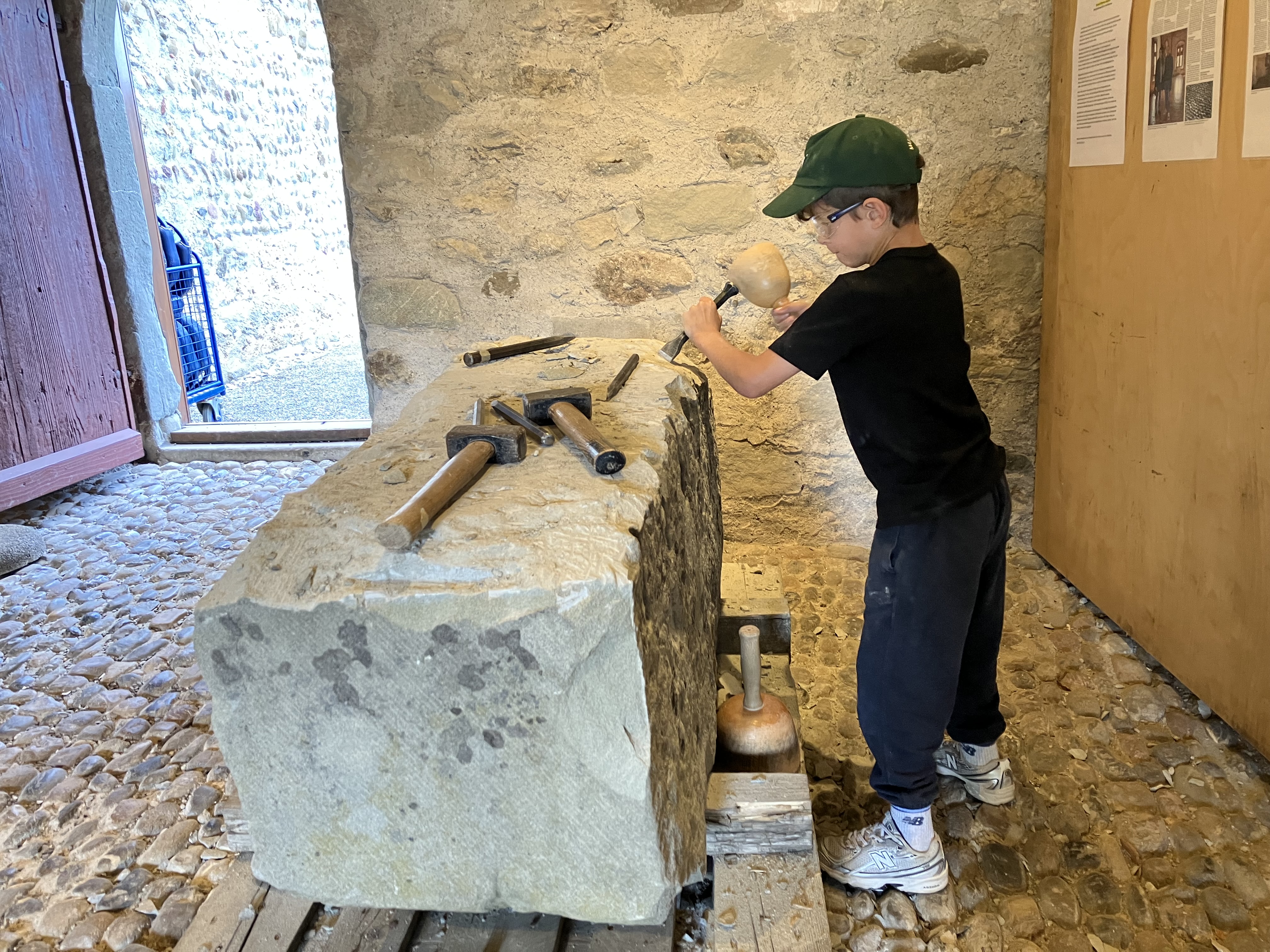
Gustavo is no exception. Wearing safety goggles, he sets to work on a large block of sandstone under supervision. In one hand he holds the mallet, a short, heavy stonemason’s hammer. In the other, the pointed chisel. Later, he adds the mallet, a wooden hammer for finer work. With every blow, small pieces break away from the stone. Soon, the splinters are flying about so incessantly that museum director Florence, sitting at the bistro table nearby, puts on a pair of safety goggles as a precaution. Whilst she talks about the Knights Hospitaller, governors and monastery beers, Gustavo carries on working undeterred. Later, he even tries his hand at his first engravings.

By the end of the afternoon, one thing is clear: the swords were fascinating. So were the helmets. And the chainmail, of course. But what impressed him most was the stone. Perhaps that’s because sandstone holds stories. The house has remained. Many of its inhabitants’ names have not. Gustavo is already working on a possible solution. After several hours with a mallet, pointed chisel and chisel, he has begun to engrave letters into the sandstone.

His persistence eventually secures him a taster apprenticeship with stonemason Winiger in Hombrechtikon. In two weeks’ time, he’ll be allowed to spend an afternoon there continuing his chiselling. His crusade for genuine craftsmanship has begun. In the car on the journey home, he falls asleep immediately.

Upcoming events

CHILDREN'S TOUR

Ritterhaus Bubikon

CHILDREN'S TOUR

Who were the Knights Hospitaller? And what was life like for them in the Knights’ House? During the tour, the children will learn about the house, ...

21.10.2026  |  15:00

Garden tour of the special exhibition

Ritterhaus Bubikon

Garden tour of the special exhibition

Spring symbolises new beginnings and growth. Buds bursting into bloom and the ancient medicinal plant Aristolochia evoke birth and a fresh start. In the ...

25.10.2026  |  14:00

FONDUE EVENING

Ritterhaus Bubikon

FONDUE EVENING

We are hosting a fondue evening in our cosy dining room. Choose your favourite flavour: a classic cheese fondue, or one enriched with mushrooms or ...

30.10.2026  |  17:00

More dates available

Published from Adrian Schräder on June 11, 2026.

More from our scouts

32 Questions for the Winterthur Museum of Photography
12.03.2026

32 Questions for the Winterthur Museum of Photography

The Winterthur Museum of Photography is concerned with your visual literacy; it is not part of the entertainment industry, does not break any taboos, but is willing to face our questioning.

Kulturzüri
Kulturzüri
Highlights among the nominees for the Swiss Film Award 2026
12.02.2026

Highlights among the nominees for the Swiss Film Award 2026

Rebellion, care work, war and identity: the nominees talk about a present-day world in a state of emergency.

Nora Kehli
Nora Kehli
Picasso & Bloch - Friendship as a collection
18.09.2025

Picasso & Bloch - Friendship as a collection

‘Picasso and Bloch’ in Zurich tells the story of a unique friendship between artists – and of art that creates both a sense of closeness and enduring value.

Nicole Seipp-Isele
Nicole Seipp-Isele

More from your scouts

Fabio Gassmann
Fabio Gassmann
Tatjana Blaser
Tatjana Blaser
Rebekka & Sebastian
Rebekka & Sebastian
David Suivez
David Suivez
Coucou Kulturmagazin
Michèle Bischoff
Michèle Bischoff
All scouts