«Ich bin wü ü ü ü ü ü ü ü ü tend»

A dialogue between the Swiss artist Mai-Thu Perret and the iconic Dadaist Sophie Taeuber-Arp.
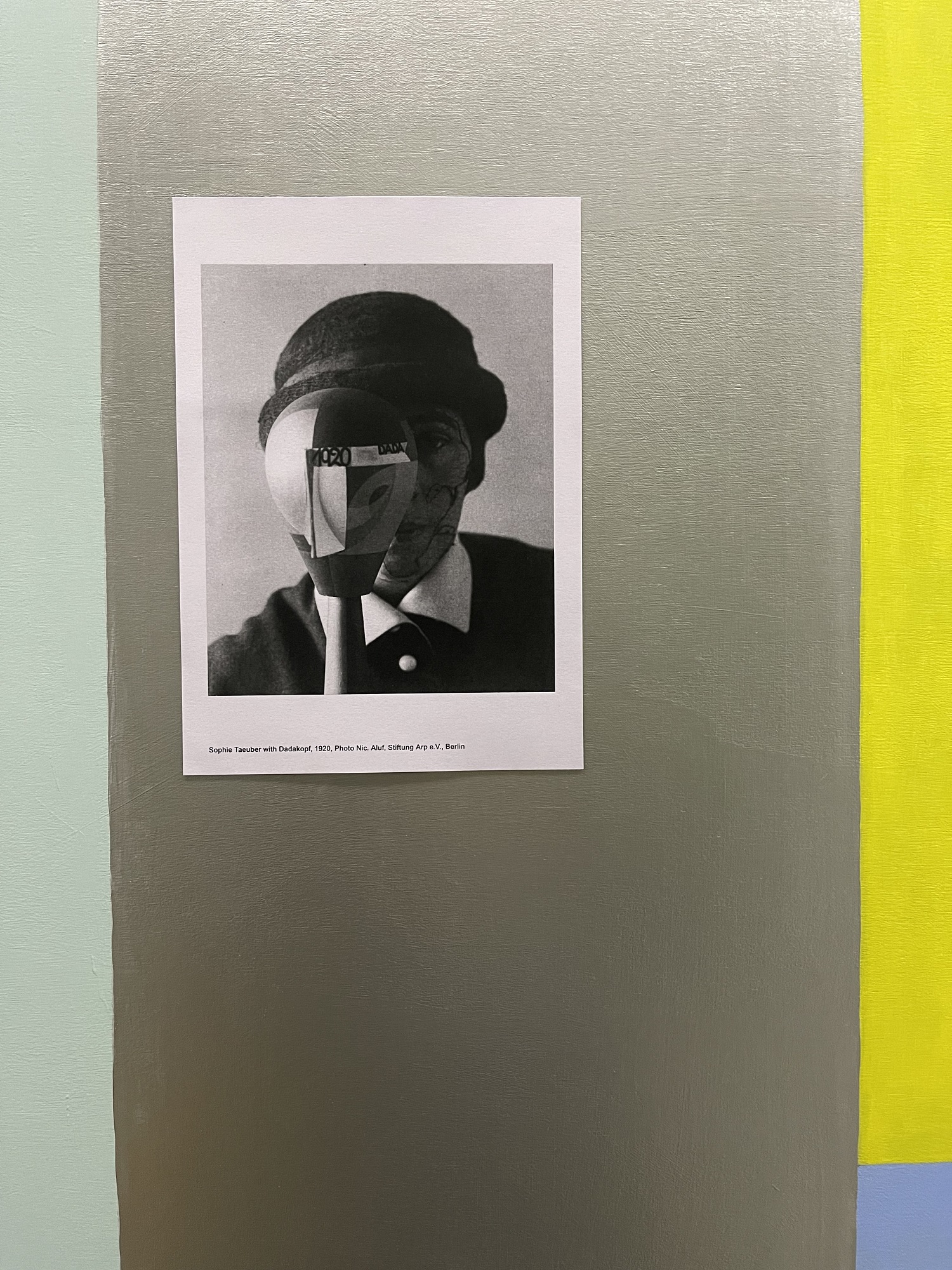
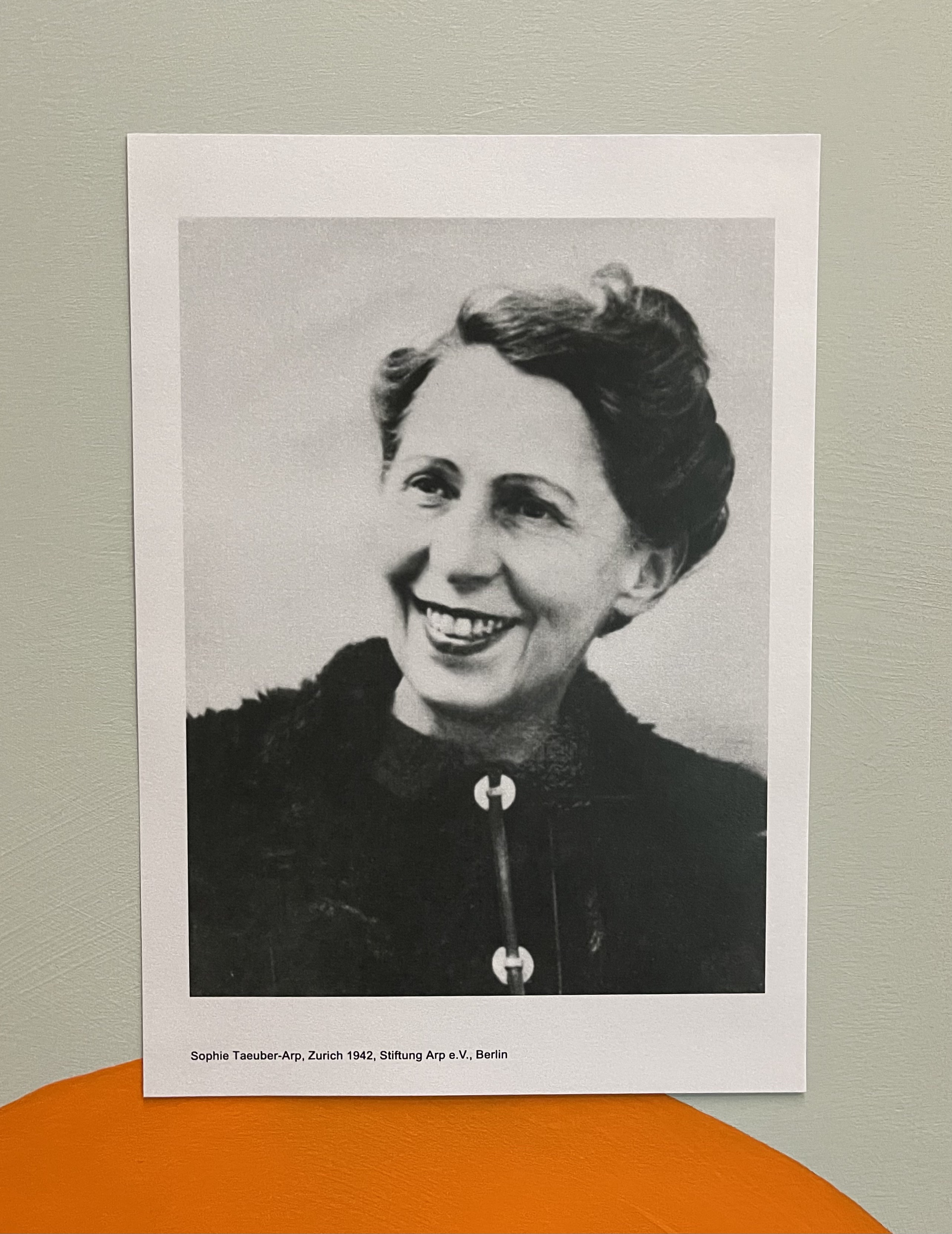
Sophie Taeuber-Arp's (1889 - 1943) portrait adorned the 50-franc note in Switzerland for a long time. Yet many people are unfamiliar with her name. The Appenzeller was a dressmaker, architect, furniture designer, draughtswoman, painter, sculptor, dancer and teacher at the Gewerbeschule Zurich. And she was the wife of painter, sculptor and poet Hans Arp. Like so many women in the Dada circle, she was denied recognition for a long time. As a representative of concrete, rhythmic-geometric art, she is today one of the most important avant-garde artists of the 20th century and can be regarded as a role model for today's feminists.

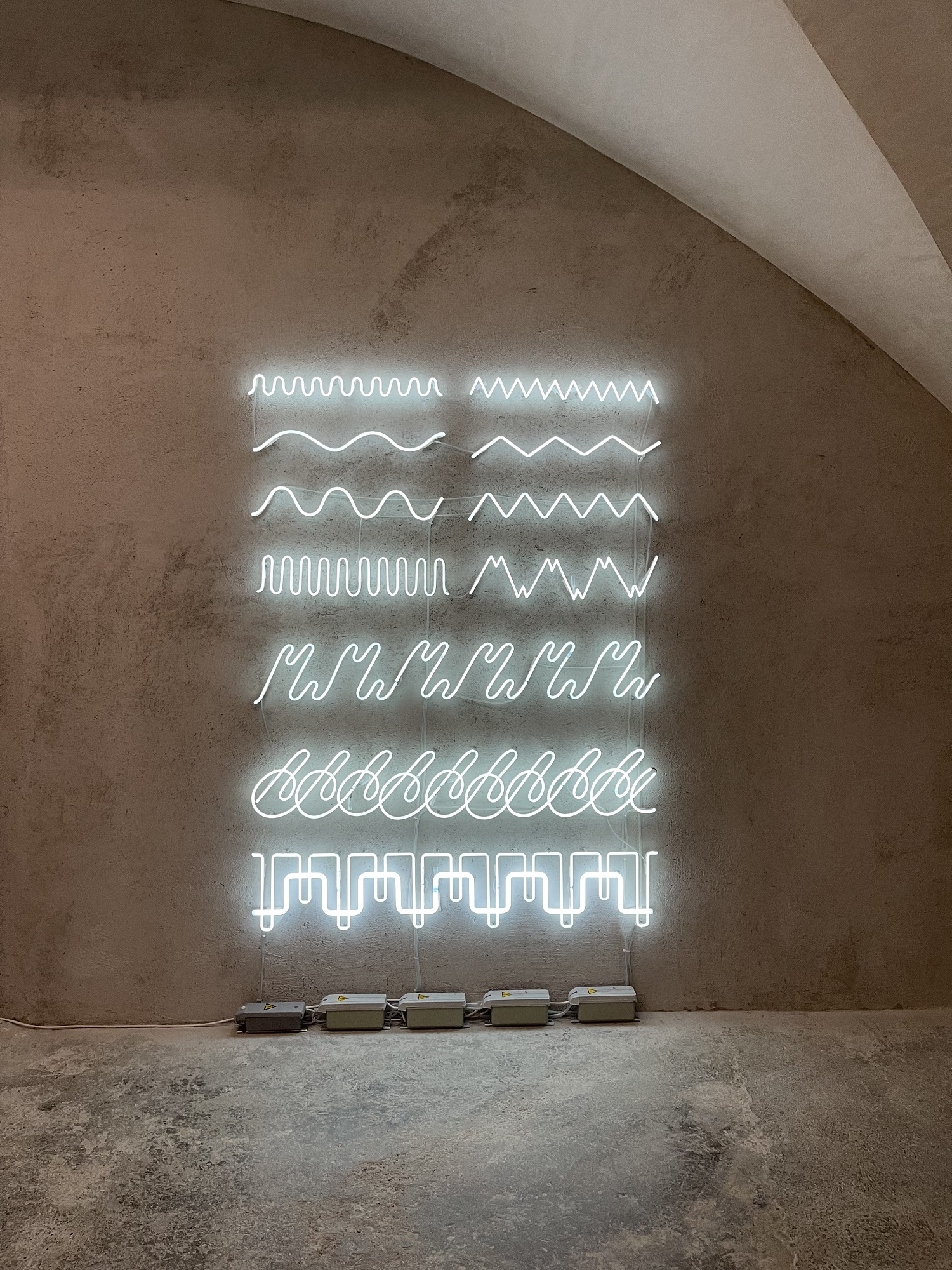
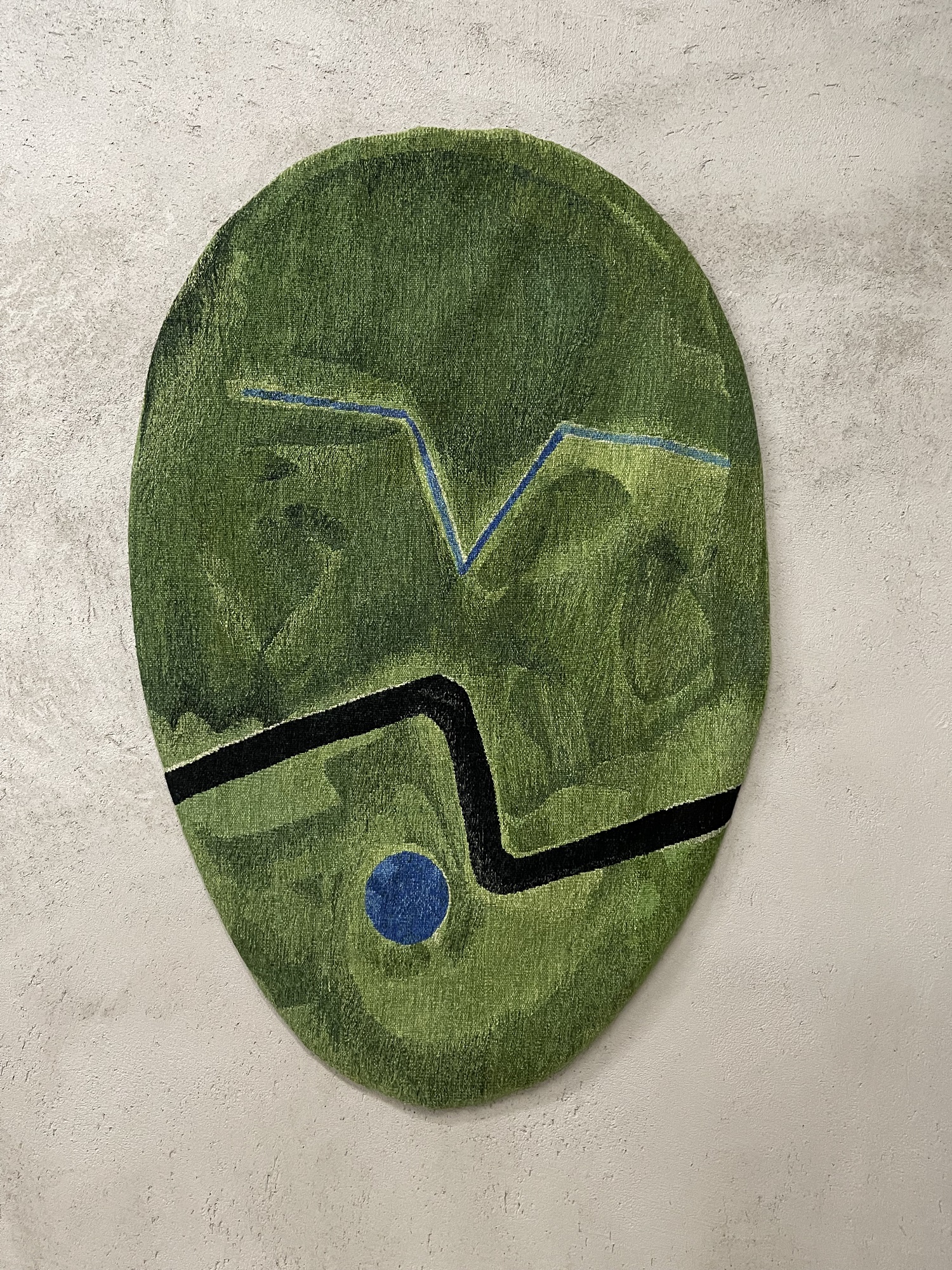
The curator Salome Hohl has selected twelve of Taeuber-Arp's 500 personal letters from an edition, arranged them into open thematic fields and, together with the Swiss artist Mai-Thu Perret, placed them on a six-part painting - the screen. Perret's work is multidisciplinary and juggles virtuously with a wide variety of artistic working techniques. She feels at home in traditional craft media as well as in performative and installative practice. For the exhibition, Mai-Thu Perret produced two new works, the neon work and the screen, which refer to Taeuber-Arp's work. Two older works referencing the Dada pioneer, the wool carpet and a small-format painting, as well as a loan of Elsi Giauque's Demoiselle initiated by Perret complete the show. Mai-Thu Perret's works are juxtaposed with selected works by Sophie Taeuber-Arp and documents from her work, life and context.

The exhibition title "Ich bin wü ü ü ü tend" is a quote from a letter by Taeuber-Arp to her husband Hans Arp, in which she was outraged by the gimmicky behaviour of some colleagues who called themselves radical artists. In addition, she conveys her perspective on Dada and its exponents in her writing.

In her letters, she appears as an emancipated, educated and courageous woman who was dedicated to art and not afraid to express her own opinion. This also shows the broad and diverse network of artists that Taeuber-Arp had at her disposal, which went far beyond the Dada circle. Over the years, she developed into a pioneer of abstract art.

The dialogue between Mai-Thu Perret and Sophie Taeuber-Arp results not only from the numerous references to the Dada pioneer, but also from the fact that Perret practices and reflects on abstract art. She has internalised the history of abstraction in the form of a multi-layered approach to art that oscillates between the search for the spiritual and the reaction to social reforms and political movements. For Mai-Thu Perret, abstraction is also linked to the search for freedom.

Modernism wanted to elevate art with an emphasis on geometric abstraction to a universally readable language. Here Mai-Thu Perret found a literary approach to the work of Taeuber-Arp. Among other things, she was inspired by the "cut-up" technique of the American writer William S. Burroughs, who created random and associative new narratives by cutting up and reassembling texts. Perret found similar processes in Dada: Sounds, noises and images were taken as elements and collaged. For Sophie Taeuber-Arp, too, the assembling of forms and the new handling of everyday materials meant an attempt to create new structures between eruption and order. She played with geometric forms that seek harmonious compositions but always have elements that step out of line.

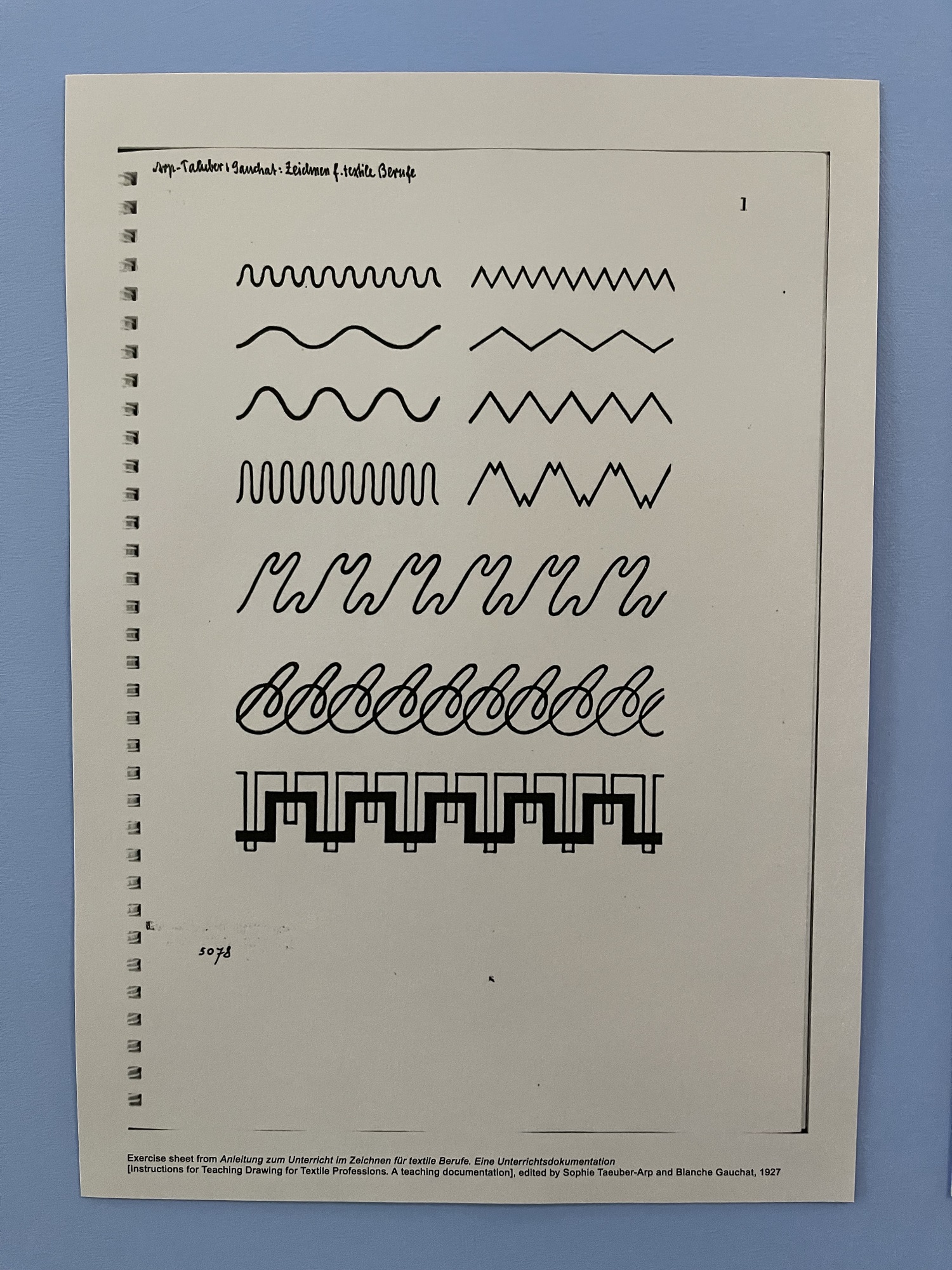
Sophie Taeuber-Arp designed everything with the same dedication: carpets, lamps, cans, puppets, kitchen furnishings, desks, paintings, sculptures, interiors or houses. In a preface to her lessons in drawing for textile professions, she wrote: "The desire to enrich and embellish things cannot be interpreted materialistically, i.e. in the sense of increasing their value as possessions, but rather arises from the drive for perfection and creative action". Mai-Thu Perret translated an exercise sheet with patterns from this teaching folder into a neon work. In doing so, the artist transferred a pattern from the traditionally female connotated textile craft into a medium from the tradition of Minimal Art, which was male dominated. With the wool carpet, Perret refers to the art movement Fiber Art, which was revolutionised by the feminist movement in the 1960s and 1970s, and to the best-known Fiber Art artists Elsie Giauque and Gertrud Sonderegger, who were both students of Taeuber-Arp and whose works are also included in the exhibition.

(Source: Exhibition text on Sophie Taeuber-Arp / Mai-Thu Perret, Cabaret Voltaire)

Exhibition view Sophie Taeuber-Arp / Mai-Thu Perret «Ich bin wü ü ü ü ü ü ü ü tend», Cabaret Voltaire 2022; Mai-Thu Perret, Untitled (Different Ways), 2022. Photo: Cedric Mussano

Cabaret Voltaire

«Ich bin wü ü ü ü ü ü ü ü tend», Sophie Taeuber-Arp / Mai-Thu Perret

In the exhibition "Ich bin wü ü ü ü ü tend", older and newly produced works by Mai-Thu Perret enter into dialogue with Sophie Taeuber-Arp.

Permanent exhibition

Published from Simone Liedtke on April 13, 2023.

More from our scouts

My first time ... at the Strauhof
10.08.2023

My first time ... at the Strauhof

Of artistic encounters, menstruating ice dancers and Bela B. reading from comics by Liv Strömquist.

Nora Kehli
Nora Kehli
Tips for the Winterthur Short Film Festival 2025
30.10.2025

Tips for the Winterthur Short Film Festival 2025

Verirrt im Kurzfilm-Dschungel? Wir helfen euch durchs Festivalgewirr mit Tipps, Quiz und Lieblingsprogrammen.

Rebekka & Sebastian
Rebekka & Sebastian
"Curtain falls dog barks"
20.11.2025

"Curtain falls dog barks"

Das Aargauer Kunsthaus zeigt Klodin Erbs grösste Einzelausstellung: Ihre Gemälde, Installationen und Videos sind voller intensiver Schaffenskraft.

Simone Liedtke
Simone Liedtke

More from your scouts

Fabio Gassmann
Fabio Gassmann
Susanna Koeberle
Susanna Koeberle
Simone Liedtke
Simone Liedtke
Katharina Nill
Katharina Nill
Sandra Smolcic
Sandra Smolcic
Sonja Streifinger
Sonja Streifinger
All scouts