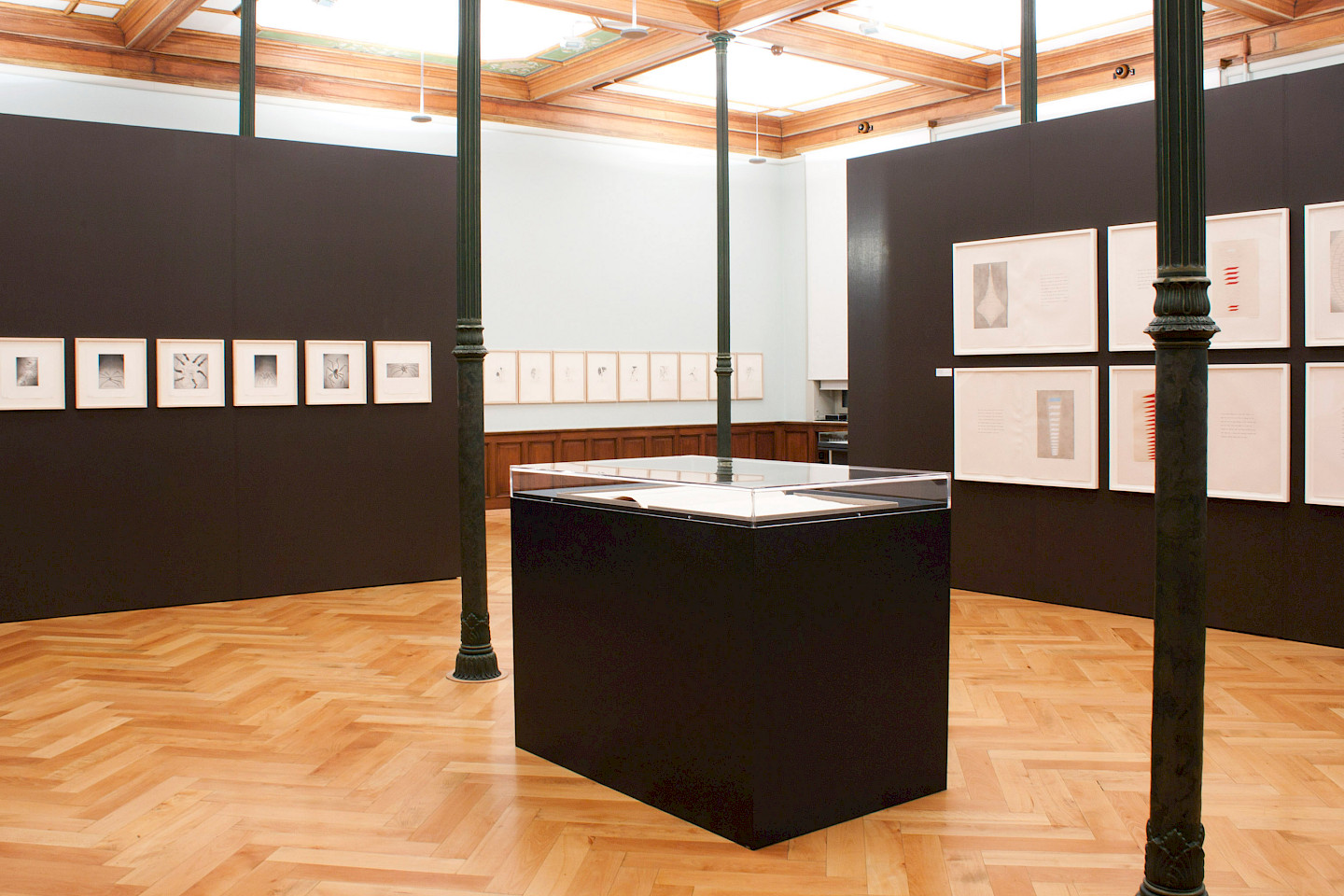
Whether Old Masters or young Swiss art - whether printed or drawn: the ETH Zurich Graphics Collection is a top-class art collection with around 160,000 works on paper. It is one of the largest and most important graphic collections in Switzerland ...
Before attending, double-check the required language skills on the organizer's website.
(Un)seen. Persons with disabilities in art
Persons with disabilities have always been part of society. It is therefore no surprise
that blindness, deafness, physical disabilities and intellectual disabilities have been
subjects of art throughout the ages—explored more or less intensively depending
on the period. They were inscribed in depictions of pain and sanctity, in caricatures and
anatomical studies, in portraits and allegorical compositions. Yet the people depicted
often remained unseen themselves: what was shown was usually the gaze directed
at them, rarely a perspective of their own.
The exhibition approaches disability not as a medical category but as a cultural,
social and aesthetic concept. How is disability made visible in art? This question is
explored through works by Francisco Goya, Jacques Callot, William Hogarth and many
others. A transhistorical look at the collection pursues the thesis that the motif of
«disability» has, particularly in recent years, moved away from established pictorial
traditions. For persons with disabilities are increasingly no longer merely the subject
of art, but its creators: artists are making their own disability the theme of their work
and raising it to a leitmotif.
How far perceptions are shifting became clear in 2025, when the British artist
Nnena Kalu (b. 1966) became the first autistic artist with a learning disability to win the
prestigious Turner Prize, moving to the centre of a world that often pushes persons
with disabilities to its margins.
The works gathered here can be read as documents of a history of seeing: they
reveal how persons with disabilities were perceived and represented, up to and
including their partial marginalisation. The Graphische Sammlung ETH Zürich understands
this exhibition not as a definitive answer but as an invitation to think further—
about disability, about history, and about the institutions that shape and pass on both.
Curator: Mariko Mugwyler, Graphische Sammlung ETH Zürich
To this organizer's website
from December 02, 2026
until March 07, 2027
Graphische Sammlung ETH Zürich
Rämistrasse 101
ETH Zürich
8092 Zürich
+41 (0)44 262 40 46
info@gs.ethz.ch
Infos Zugänglichkeit:
Die Graphische Sammlung ist hindernisfrei zugänglich. Der barrierefreie Eintritt erfolgt über den Haupteingang der ETH von der Rämistrasse aus. Direkt vor dem Museum gibt es keinen Behindertenparkplatz. Weitere Auskünfte erteilt der Informationsschalter in der Haupthalle vor Ort.
