How do we keep it with nature?

The Stapferhaus offers a clever exhibition that not only reveals exciting stories and problems, but also enables everyone to examine their own points of view.

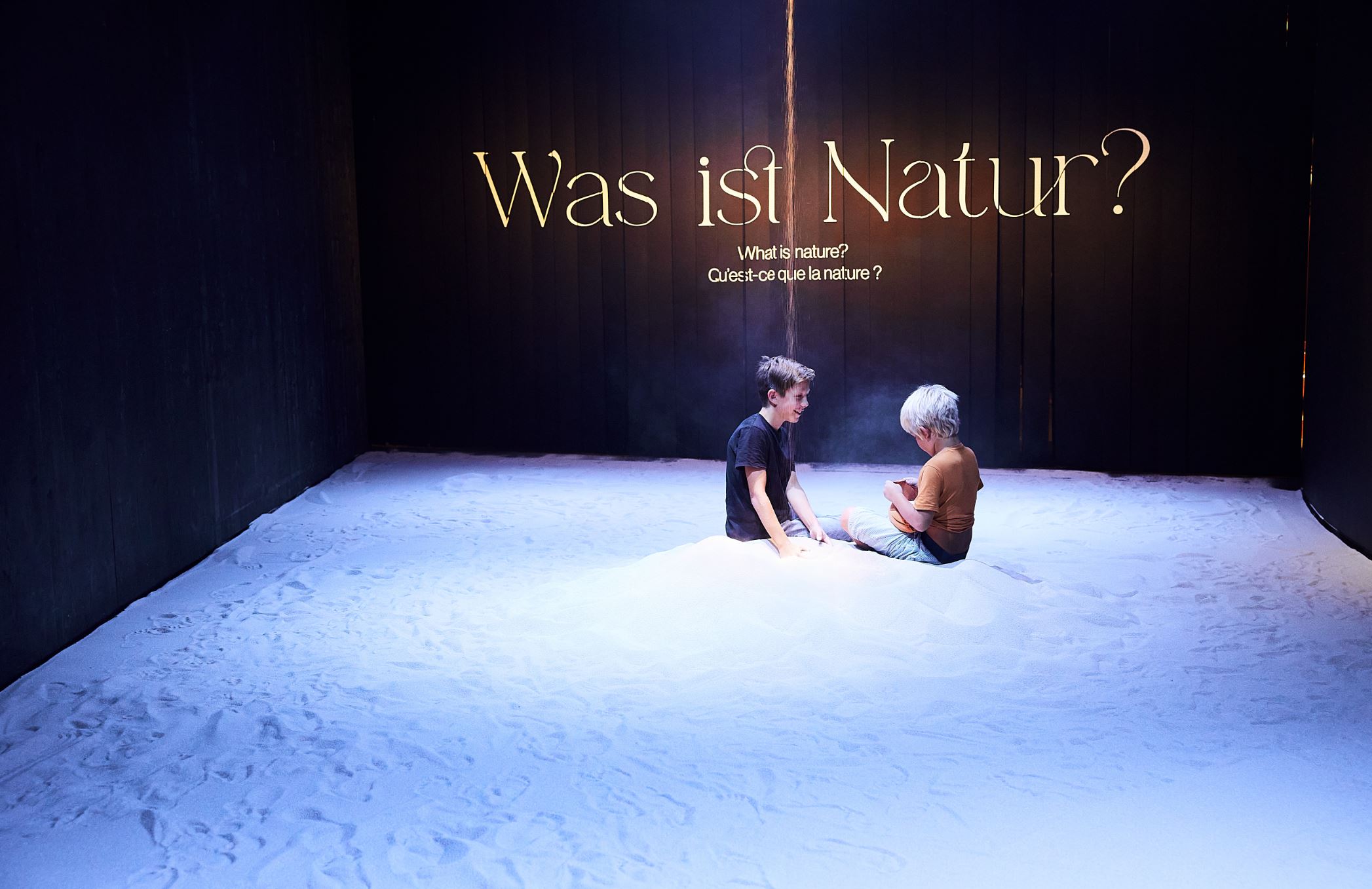
Even the entrance to the exhibition is unusual. I am asked to take off my shoes and socks (which is voluntary, of course) to explore "NATURE - and us?" barefoot. I walk over sand, steel, wooden planks, concrete, pebbles and through a dry riverbed, feeling the variety of materials under my feet. It feels really good.

I walk through eight rooms that provide a lot of stories and information. Two examples: In 2019, a scientific expedition reached the seabed at a depth of almost eleven kilometres. It discovered three previously unknown animal species there - and a plastic bag. The second story is short and many people who unsuspectingly eat a chicken will neither know nor like it: Ross 308 is the most popular broiler chicken in the world. Within 37 days, the chick grows into an animal weighing two kilograms with an oversized breast and massive thighs. Then it is time for slaughter.

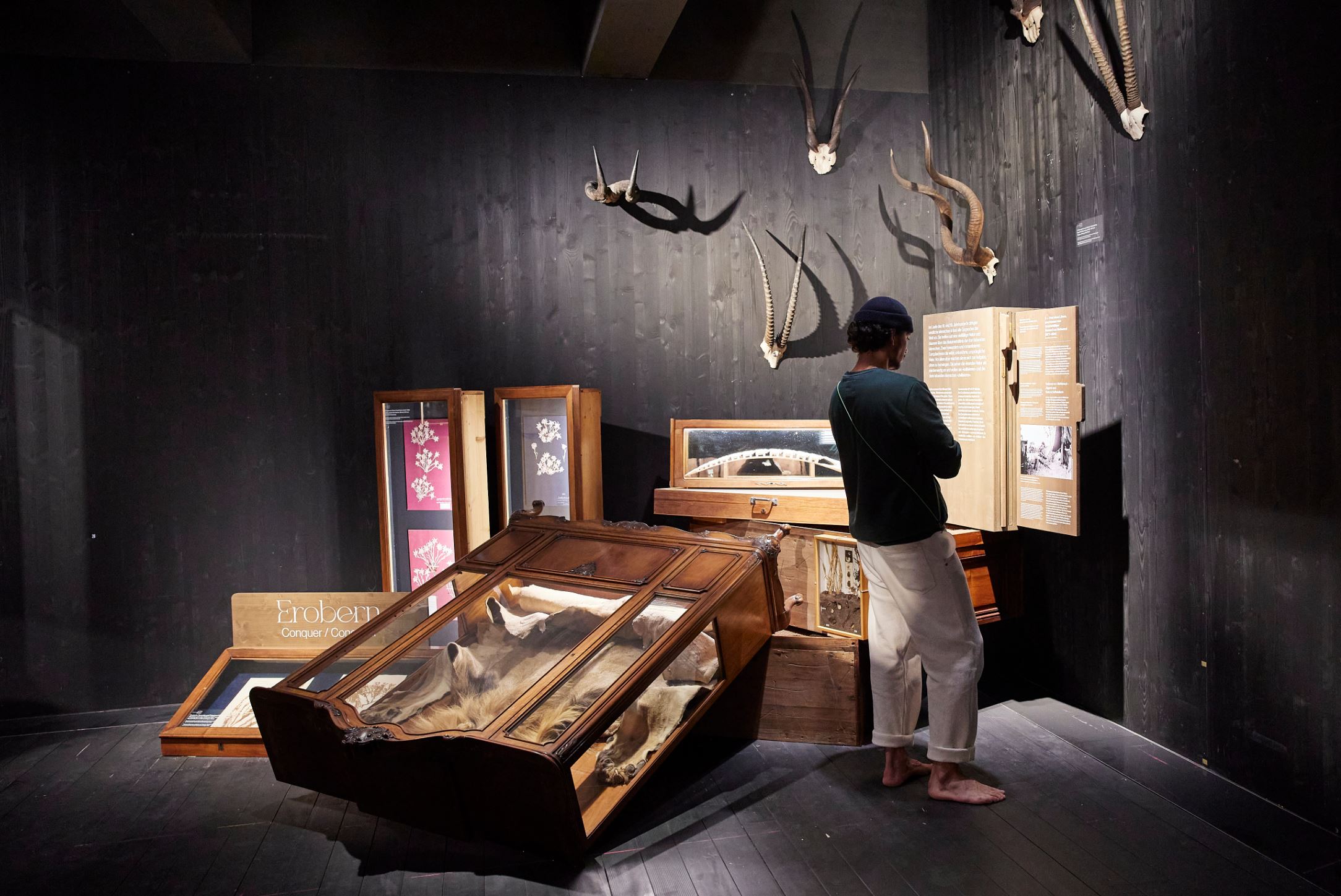
But back to start. With many exhibits - from wolves to impaled insects - the first room tells of man's struggle against the power of nature. They conquered and explored terrain, developed systems and systematised nature, and in the 19th century began to protect forests, stretches of land or bodies of water. After all.

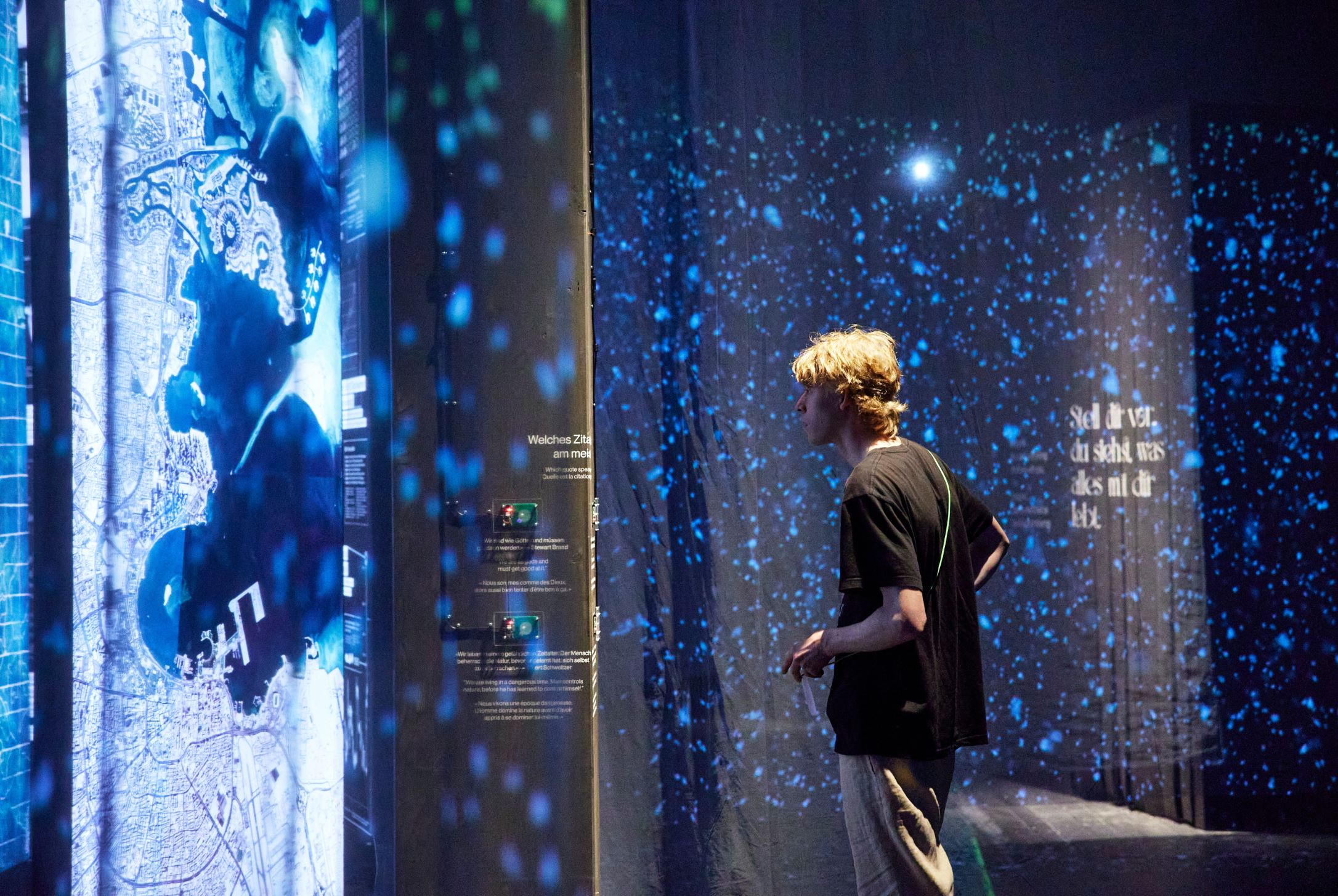
It just wasn't enough. The central, very large following room with several integrated cabinets offers hundreds of vividly presented information and stories about the ailing state of the world and its creatures in the central roundel. Films about the beauty and endangerment of our earth, about the diversity of viruses and bacteria within us are shown on large screens; in the cabinets, exhibits, photos and texts tell of a river as a legal object, communicating plants and animals as companions.

The exhibition does not provide simple answers to complex problems. In the last room, a huge canvas awaits me and the other guests, on which four people argue with their views on the relationship between humans and nature and possible solutions in the crisis. They each stand for a certain attitude. One man is tech-savvy and believes in saving the world through innovation. The woman next to him is well informed and sees the decisive influence in measures that take people with them. The other man is convinced that only a radical change in our lifestyles can save the world. The second woman, on the other hand, is completely unconcerned and unwilling to change her lifestyle. The four repeatedly ask the audience in the room to share or reject their beliefs by means of buzzers handed out at the entrance. I find the discourse very interesting because it relies on debate and self-questioning. Or, as Sibylle Lichtensteiger from the exhibition team puts it: "For us, the great task of making an exhibition is to make complex topics tangible in a sensual way without political exhortations

I use the buzzer again and again, because at many stations I am asked to give my opinion on a certain problem. For this, I have four alternatives in each case. For example, in the case of a house fire, I can choose in which order humans, pets and farm animals should be saved, can decide whether the viruses inside me interest me, whether I find them useful, whether they depress me or whether I simply don't care. My many answers result in a profile that I can call up via printout at the exit.

I am quite well informed, think holistically on many issues, am sometimes too carefree and do not believe in saving nature through genetic manipulation and other technical advances. The result corresponds to my self-assessment. But it is clear to me: taking the train instead of the plane, driving less, not eating meat, heating less in winter and wearing clothes for another year will not be enough by far. Much more needs to be done.

Nature. And us?

Stapferhaus

Nature. And us?

We find respite in nature and ourselves in the wilderness. We revere the natural and long for untouched landscapes. At the same time, we search for ...

Permanent exhibition

Ecosystem: Does nature need rights?

Stapferhaus

Ecosystem: Does nature need rights?

A river with fundamental rights flows through Colombia: In 2017, the Rio Atrato was granted the status of a legal subject. What does that mean in concrete ...

Die Natur und ich

Stapferhaus

Die Natur und ich

«Was ist das, ein Mensch?»  Fragen wir Hunde und Pilze, Pflanzen und Flüsse! Mit allen Sinnen tauchen wir gemeinsam in die Ausstellung ein. Wir ...

Safety. A risk?

Stapferhaus

Safety. A risk?

We control, regulate and monitor. We upgrade our equipment, protect ourselves, are well insured, yet feel deeply insecure. Nevertheless, risk holds a ...

from 08.11.2026
until 31.10.2027

Published from on May 18, 2023.

More from our scouts

Desire is the force of life
12.02.2026

Desire is the force of life

Choreographer Soraya Leila Emery offers a fresh perspective on the body, desire and female empowerment.

David Suivez
David Suivez
Between Sound and Glitch
25.06.2026

Between Sound and Glitch

An exploded bullet, digital glitches and an old mirror: the exhibition ‘*.sculptr’ shows just how surprisingly vibrant sculpture can be conceived today.

Nicole Seipp-Isele
Nicole Seipp-Isele
Film recommendations for April
02.04.2026

Film recommendations for April

This month, we can look forward to a dialogue between film and theatre, short films by photographers, contemporary compositions set to early silent films, and queer cinema.

Nora Kehli
Nora Kehli

More from your scouts

Ron Orp
Ron Orp
Eva Cabañas
Eva Cabañas
Adrian Schräder
Adrian Schräder
Nora Kehli
Nora Kehli
Coucou Kulturmagazin
Michèle Bischoff
Michèle Bischoff
All scouts